Permanent Lighting
Will Permanent Lighting Damage My Roof, Soffit or Fascia? A Knoxville Homeowner's Guide
New Age Lights • August 2026 • Knoxville, TN • 8 min read
Where the track actually mounts
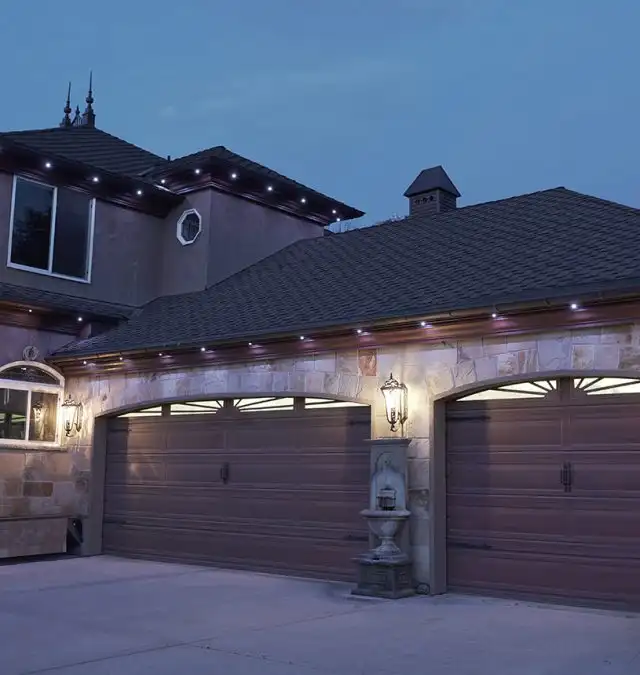
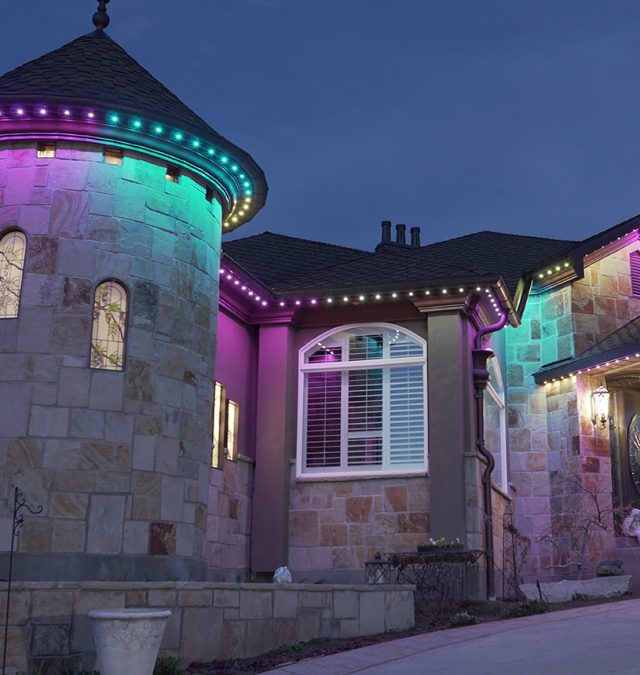
Look at the edge of your roof from the yard. The shingles end at a metal drip edge. Below that is a vertical board, the fascia, and below and behind it is the horizontal soffit that closes off the underside of the eave. Your gutters are screwed to the fascia. So is a permanent lighting track.
Both systems New Age Lights installs in Knoxville work this way. JellyFish uses a slim, color-matched aluminum channel with the light pucks seated inside it, and Bosso uses its own fixture in a track under the roofline. In both cases the track sits along the fascia or tucks up under the drip edge, pointed down and out, so the lights wash the wall and the ground and the channel reads as trim from the street. The roofing above it is not touched, which is also why permanent lighting does not affect a roofing warranty in the way that nails through shingles would.
The soffit is not involved as a mounting surface. Soffit panels, whether vinyl, aluminum or wood, are a cover, not a structural member, and a track does not hang from them.
How the wiring gets to the controller
Permanent lighting is low voltage. The lights are fed by a controller, which on most Knoxville homes lives in the garage, and the wiring between them runs inside or along the track so there is nothing loose on the house.
At one point, usually a corner near a downspout or directly above the garage, the wire drops from the track and passes through the soffit into the attic or garage. That penetration is sealed. Where a run has to jump a gap, at a bump-out or between the house and a detached garage, the wire is routed along trim and sealed, not draped across roofing. Bosso's controller is UL-rated and waterproof and needs solid Wi-Fi where it sits; JellyFish's controller powers about 263 feet of track and also wants a dedicated, serviceable location. Both need a proper circuit, which we check at the consult so nobody is improvising with an extension cord on install day.
Sealing and the East Tennessee winter
December in Knoxville averages a high near 51°F and a low near 33°F, and winter is the wettest season in the region. Whatever is fixed to your eave will be soaked, frozen and thawed repeatedly for weeks. That cycle is what pulls cheap seasonal clips loose, and it is why a permanent install uses fasteners rated for the exposure, seals every penetration, and is done once in dry weather rather than handled every November.
Low voltage matters here too. A wet roofline and a low-voltage track are not a hazard in the way a wet extension cord is. The controller in the garage is the only part of the system running at household voltage.
Knoxville trim and roofing, one material at a time
Knoxville is not one housing stock, and the edge of the roof is where that shows. Here is how a track goes on each of the edges we see across the metro.
Asphalt shingle with aluminum drip edge
The most common roof in the metro, from the subdivisions in Hardin Valley to the older streets in Powell. The track fastens to the fascia below the drip edge or tucks under the drip edge itself. Shingles and underlayment are never penetrated.
Wood fascia on older homes
Sequoyah Hills is largely 1920s and 30s, Fountain City around Gibbs Drive still has its early-twentieth-century houses, and Bearden along Kingston Pike mixes both with modern infill. Old wood fascia holds a track well when it is sound. The crew probes it before fastening, because paint hides soft wood. If a section is rotted you hear it at the consult and the repair happens first. Fastening lights to bad wood is how you end up with a sagging run and a bigger carpentry bill later.
Some craftsman bungalows in Fountain City have exposed rafter tails rather than a continuous fascia. That is one of the edges where the two systems differ in how cleanly they sit, and it is exactly the kind of roofline where we bring both to the consult. The fixture differences are laid out in JellyFish vs Bosso for Knoxville homes.
Aluminum- or vinyl-wrapped fascia
Very common on the single-story ranches in Powell and the 1990s builds in Karns. The wrap is a thin skin over a wood fascia board. Fasteners go through the wrap into the wood behind it and are sealed, the same way the gutter hangers already are. The track color is matched to the wrap so the channel disappears against it.
Vinyl soffit
Nothing is fastened to vinyl soffit panels. They flex, they expand in summer heat, and they are not meant to carry anything. The track goes on the fascia above them.
Brick
Brick covers a great deal of East Tennessee, from the colonials in Sequoyah Hills to new builds in Covered Bridge. Almost all of them still have a fascia at the eave, and that is where the track goes. New Age Lights does not drill brick for a roofline run. Where a brick gable end rises to the roof with no fascia at all, the crew talks through the options at the consult rather than putting anchors into your masonry on the day.
Standing-seam metal roofs
Increasingly common on farmhouse-style builds around Maryville and across Blount County, and on some Oak Ridge remodels. Metal roof panels are never penetrated. The track sits under the eave on the fascia, exactly as it does on a shingle roof. Closer to the mountains these homes also take more weather, so fasteners and sealing are specified for a wet January rather than for speed.
Slate and tile
Rare in the metro, but a few of the grander 1920s houses in Sequoyah Hills have them. The rule does not change: the roofing is never touched, the track goes on the fascia, and the crew stays off the slate.
Historic districts and HOAs
Sequoyah Hills is a National Register historic district, and Fountain City has one around Gibbs Drive. National Register listing on its own does not restrict what a private owner fastens to a fascia, but a local historic overlay or neighborhood conservation overlay can, and some Knoxville streets carry one. If yours does, the fact that a track mounts to trim with reversible fasteners and never alters the roof is the point to make in your application. HOA architectural committees in Farragut and Hardin Valley ask a related question, which is what the house looks like in daylight; the answer is a color-matched channel that reads as fascia. The full process is in Permanent outdoor lighting and HOAs in Knoxville.
What the warranty covers
Both manufacturers warrant parts for five years. JellyFish covers parts, labor and service in year one; Bosso covers labor for one year. New Age Lights adds its own workmanship warranty on the install, and we install and service every system we sell. If a run drops out, or a fastener works loose after a hard winter, you call us, not a manufacturer's support line. The manufacturers' warranty pages are at jellyfishlighting.com and bosso.biz.
That is also the case for hiring an installer who will still be answering the phone next December. A system that is fixed to your house permanently should be fitted by someone with a local address. Ours is on Midway Road in Oak Ridge.
If you ever remove it
Most people never do, but it is a fair question before you fasten something to your house. The track unscrews from the fascia, the controller unplugs, and the wire comes out of the soffit penetration, which is then sealed. What is left is a row of small fastener holes along the fascia, the same kind a removed gutter hanger leaves. They fill and paint. The aluminum track itself is recyclable. The roof is exactly as it was, because the roof was never part of the install.
Do permanent lights damage the roof or soffit?
No. This is the question people search most, so here it is plainly. The track mounts to the fascia or drip edge, which is built to carry gutters and is the correct surface for it. Nothing penetrates shingles, underlayment, metal panels or slate. The soffit is not a mounting surface. Wiring is sealed where it passes into the house. On old wood, the crew checks the fascia first. The Knoxville outdoor lighting FAQ has the short version, and the residential lighting page lists what a New Age Lights install includes.
Frequently asked questions
Do permanent lights damage the roof or soffit?
No. The track is fastened to the fascia board or drip edge under the eave, the same surface your gutters hang from, and nothing is nailed, stapled or screwed through shingles, underlayment or the roof deck. The soffit is not load-bearing and the track does not hang from it. Done properly, the only marks a system ever leaves are small fastener holes in the fascia if it is removed.
How does the wire get from the roofline to the controller?
The wiring runs inside or along the track and drops at a corner, usually near a downspout or the garage, then passes through the soffit into the attic or garage where the low-voltage controller lives. Each penetration is sealed. No wire is draped over roofing.
Can permanent lighting go on a brick house?
Yes. Most brick homes in Knoxville still have a wood or wrapped fascia at the eave, and the track fastens there. New Age Lights does not drill brick for a roofline run. Where a brick gable end meets the roof with no fascia, the crew discusses options at the consult rather than improvising.
What about a standing-seam metal roof?
The roof panels are never penetrated. The track sits under the eave on the fascia, as it does on a shingle roof. Metal roofs on newer farmhouse-style builds around Maryville and Blount County are lit this way.
What if my fascia is old wood, like in Sequoyah Hills or Fountain City?
The crew checks the fascia for soft spots before fastening. Sound wood takes the track without issue. If a section is rotted, you are told at the consult and the repair happens before the lights go up, because fastening to bad wood helps nobody.
What happens if I ever remove the system?
The track unscrews, the controller unplugs, and what is left is a row of small fastener holes along the fascia, which fill and paint like any other trim repair. The roofing is never involved.
Have us look at your eave before you decide
The consult is free and it starts at the edge of your roof: fascia, drip edge, gutter profile, power. We tell you exactly what would be fastened where, and give you one fixed number.
Get a free quote or call (865) 264-0180.