Permanent Lighting
Eleven Months of the Year: Using Permanent Lighting Beyond Christmas
New Age Lights of Knoxville • October 2026 • Knoxville & Oak Ridge, TN • 7 min read
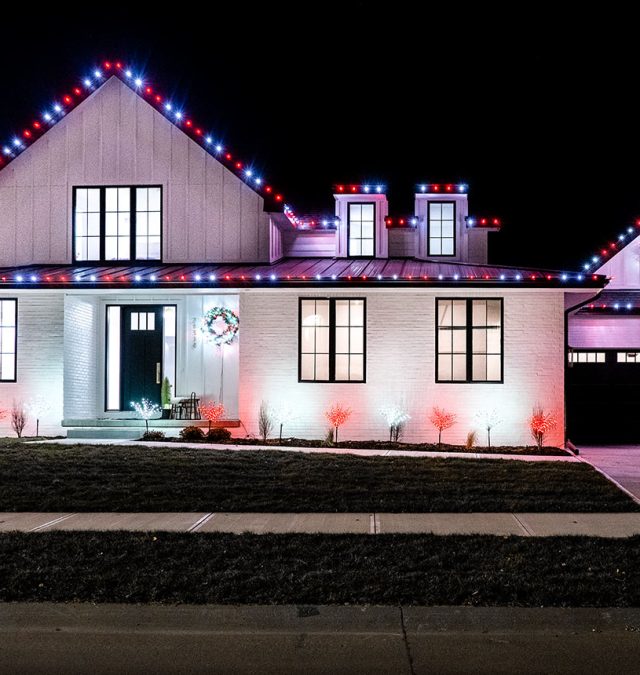
Short Answer: A permanent system used only for Christmas produces value for about six weeks a year. The households that feel the purchase was worthwhile are the ones running an everyday warm architectural setting the rest of the time, which turns it from decoration into exterior lighting. Beyond that, the occasional uses that actually get used are game days, a handful of holidays, and practical situations like guests arriving or a gathering. Novelty scenes get configured once and rarely touched again.
Permanent lighting gets sold on the December image, and that is fair enough because December is when people go looking for it. It is also the least interesting thing these systems do, and the households who are happiest with the purchase figured that out quickly.
The question worth asking before buying is what the system does on an ordinary Tuesday in March. Here is the honest inventory of what gets used and what does not.
The Everyday Setting Carries the Value
This is the use that justifies the purchase, and it is the one people think about least when shopping.
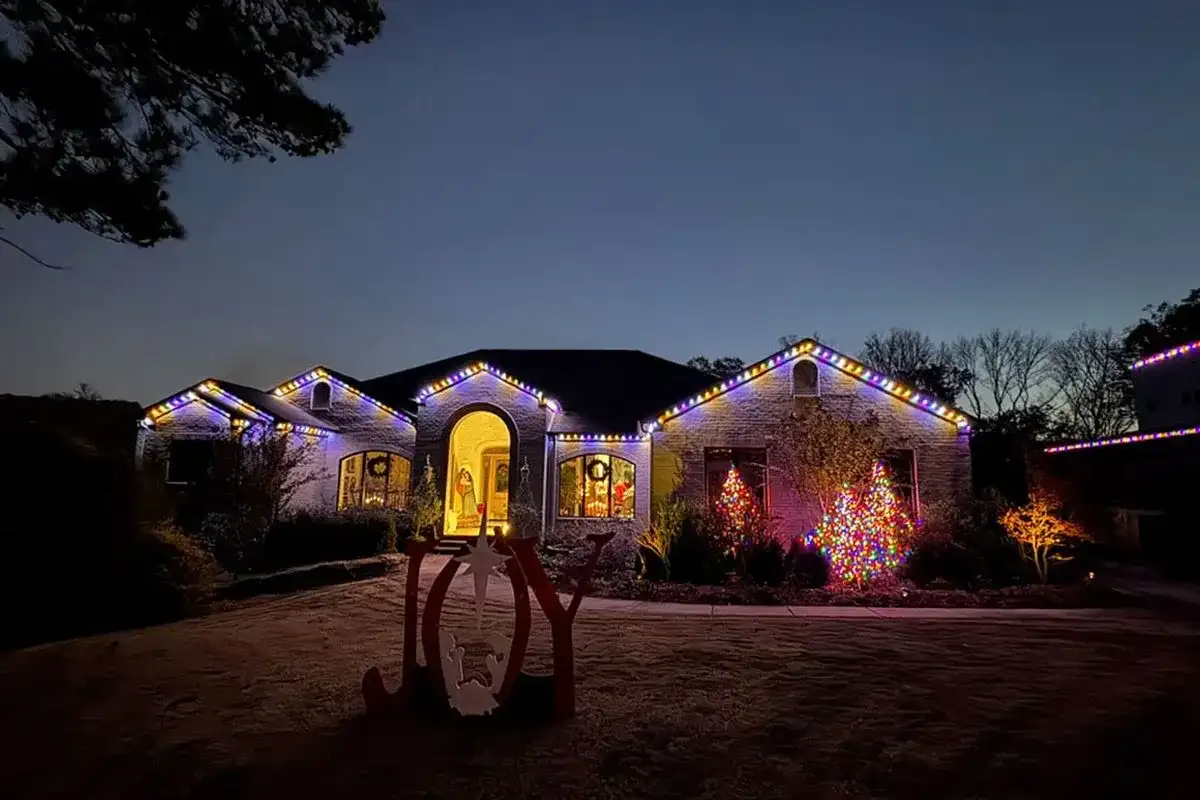
A roofline running warm white at reduced brightness is architectural lighting. It defines the shape of the house against the dark, emphasizes the lines someone designed, and makes the property look finished at night. That is the same job dedicated facade lighting does, and the system is already installed.
The practical difference this makes is largest in winter, which is exactly when it matters here. From November through February, most Knoxville households arrive home in the dark and the exterior of the house is simply not visible for the hours they are there to see it. A warm everyday setting restores that.
It also affects how the inside feels. A lit exterior visible through windows makes a room feel less like it is bounded by black glass, which is a genuine and underrated benefit through the short days.
Households that set this up and schedule it to run automatically get value every single night. Households that leave the system off unless there is an occasion get value six weeks a year for the same money.
Game Days
In this part of Tennessee this needs no explanation, and it is genuinely one of the most used scenes on systems we install.
Orange is a setting rather than a project. On a Saturday in fall, the house runs team colors from the moment the sun goes down, and on Sunday it goes back to warm white without anyone climbing anything.
The reason this gets used, when a lot of novelty features do not, is that it recurs on a known schedule and it takes one tap. Features that require configuration get used once. Features that are already saved as a preset get used every week of the season.
The same logic applies to school colors for households with kids in a particular high school, and to a college other than the obvious one.
The Holidays That Actually Get Used
People imagine using every holiday and then use about four. Worth knowing which ones in advance so the presets get built for them.
Christmas is the obvious one and it stays on for weeks rather than a night, which is why it dominates the sales conversation.
Halloween gets used consistently, partly because orange and purple read clearly and partly because it coincides with the first genuinely dark evenings of the year. In East Tennessee, late October is when the early sunset becomes noticeable.
The Fourth of July gets used, though it is worth noting that sunset in July is late enough that the window is short.
Beyond those three, usage falls off sharply. Valentine's Day, St. Patrick's Day, and Thanksgiving get configured with enthusiasm and then used once or twice. That is not a criticism of the systems, it is just how households behave, and it is worth knowing so expectations match reality.
The Practical Uses Nobody Mentions
These are not in any brochure and they come up constantly from people who have lived with a system for a year.
Guests arriving is the most common. Bringing the roofline up to a brighter setting makes a house easy to identify from the street, which matters more than people expect on a dark road or in a neighborhood where the numbers are hard to read.
Gatherings are the second. A patio dinner or a party benefits from the exterior being lit rather than the house disappearing into the dark behind everyone.
Deliveries and late arrivals are a third. Bringing lights up when someone is coming home late is a small thing that gets used regularly.
And there is a perimeter awareness benefit. A house that is visibly lit every night reads as occupied and attended to, which is not a security system and is not nothing either. The value is in the consistency rather than in brightness.
What Gets Configured and Forgotten
Being honest about this prevents disappointment and helps people evaluate the purchase on the right terms.
Complex animated sequences get built during the first week and rarely run afterward. They are engaging to set up and tiring to watch over an evening.
Music synchronization, where offered, follows the same pattern. Genuinely fun for a party, essentially unused the rest of the time.
Obscure holidays get presets that never fire. Nobody is running a specific scene for an occasion they do not otherwise observe.
None of that makes the systems less worthwhile. It means the value concentrates in the simple everyday setting plus three or four recurring occasions, and evaluating the purchase on that basis rather than on the feature list produces a more accurate expectation.
Making Sure It Gets Used
The difference between a system that earns its cost and one that sits idle comes down to a few setup decisions.
Scheduling is the largest. A system that requires someone to open an app and turn it on gets used far less than one that comes on at dusk automatically. Astronomic scheduling, which tracks sunset by date rather than running a fixed clock, handles the seasonal shift and the November clock change without anyone touching it.
Having presets built at commissioning is second. An everyday scene, a Christmas scene, a game day scene, a Halloween scene, and off covers nearly all real use. If those exist as one tap options, they get used. If the homeowner has to build them, most never do.
Zoning helps on larger homes, letting the front elevation run while a rear section stays dark, which is both more tasteful and less intrusive to neighbors.
And keeping the everyday brightness low is what makes running it nightly sustainable rather than something you get tired of.
What It Means for Resale
This comes up in most consultations and deserves a straight answer rather than a claim.
Permanent lighting is a permanent improvement rather than a removable decoration, and it conveys with the house. Whether it adds to appraised value is not something we would assert, since appraisers treat exterior lighting inconsistently and it varies by market.
What can be said more confidently is that it affects presentation. A house photographed or shown at dusk with the architecture lit shows better than the same house dark, and evening showings are common in winter when daylight is short.
The related consideration is that a restrained system is an asset to a buyer while an eccentric one is a question mark. Another argument for a warm, architectural everyday setting rather than something built around a personal preference.
What to Do Next
Before you buy, write down what you would actually use it for. If the list is Christmas and nothing else, the value proposition is a seasonal one and worth evaluating against seasonal installation costs. If the list includes an everyday setting plus game days and a couple of holidays, the return is considerably better.
Ask specifically that presets be built and saved during commissioning rather than left for you to configure, and name the ones you want while the installer is still on site.
Set astronomic scheduling from day one so the system runs itself, and set the everyday brightness low enough that you are happy to see it every night.
To discuss a design for your home, contact New Age Lights of Knoxville at 865-264-0180 or visit https://newagelights.com/permanent-light-installation-knoxville/. We serve Knoxville, Oak Ridge, Farragut, Maryville and the surrounding communities.