Christmas Lighting
Commercial & HOA Christmas Lighting in Knoxville
New Age Lights • September 2026 • Knoxville, TN • 8 min read
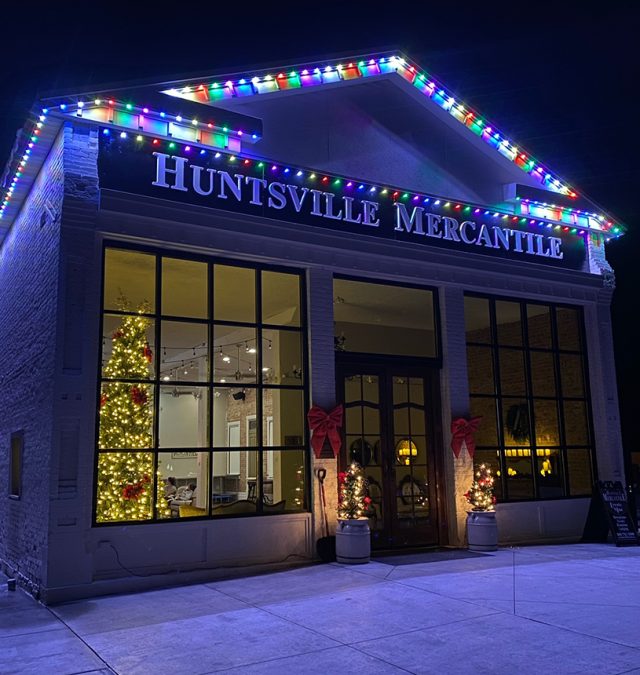
Where commercial lighting concentrates in Knoxville
Commercial holiday work in this metro clusters in a handful of places, and each one has a different reason to be lit.
- Turkey Creek, Farragut. The metro's biggest retail frontage. A lit facade here is competing directly with the unit either side of it for the same December traffic, and the constraint is that nothing can close on a weekend. Our Farragut page covers the area.
- Downtown: Market Square and Gay Street. The city already runs its own display here through December, the wrapped oaks of Peppermint Grove, the tree on Gay Street, the Peppermint Trail underfoot, the Regal Celebration of Lights on the Krutch Park extension. An unlit storefront in the middle of that reads as closed. A modest warm white frontage fixes it.
- The Kingston Pike corridor through Bearden. Independents and offices mixed along one road. Offices want the entrance canopy and building edge; independents want to read as open after dark.
- Oak Ridge's Main Street. Retail frontage alongside the federal employment that drives that end of the metro, with enquiries leaning toward entrances, canopies and signage. This is our home town and the shortest drive we make; see the Oak Ridge page.
- Maryville. A genuine downtown of its own plus medical offices, school and campus frontages and retail centers, all wanting a lit entrance installed without closing anything. Being the gateway to the Smokies, it also gets December visitor traffic. Details on our Maryville page.
- HOA entrances in Farragut and Hardin Valley. Subdivision monuments, entry trees and clubhouses in communities like Smith Farms, Rockwell Farms, Jefferson Park, Everett Woods and Hanley Hall.
The real problem is access, not design
The lighting on a commercial building is straightforward: a C9 run along the parapet or canopy edge, columns outlined, entry trees wrapped, perhaps a sign framed. What makes it a professional job is doing it at height, over an entrance customers are walking through, with the right access equipment and insurance, without costing you a trading day.
So the schedule is agreed before anyone is booked. Retail gets early mornings before opening or a quiet midweek slot, never a December Saturday. Offices get a time when a lift outside reception does not matter, which is usually before staff arrive or after they leave. Medical buildings get scheduled around clinic hours. HOAs get the entrance done in a way that never blocks the only way in.
Insurance matters more here than on a house. Work is happening above the public, on property you may lease rather than own. Ask any installer for a certificate of general liability insurance before they set foot on the site.
Phased installs for long frontages
A single storefront is one visit. A long retail frontage, a multi-building office site or a campus is not, and trying to do it in one go means either a very disruptive day or a rushed one.
Phasing splits the property into sections that each go up in a short window, so the frontage is never closed and the entrance is always open. A typical sequence for a larger site:
- Site survey covering the whole property, with access, power and time constraints noted for each section
- One written quote for the property and a schedule built around your hours
- Section one, usually the main entrance, installed in the first window
- Remaining sections installed across subsequent early mornings or midweek slots
- Every section tested and set to the same timer or schedule so the property lights as one
Consistency is the design challenge on a phased job. Elevations on a multi-building site were often built at different times with different trim, and the display has to read as one property. That is why one point of contact who knows the whole site matters more than on a house.
HOA entrances and common areas
HOA programs are their own category. The association is buying a first impression at the entrance, not a house display, and it answers to its own rules and to residents who did not vote for it.
A typical HOA program covers the entrance monument and signage, the entry trees, the clubhouse or amenity building, and any common-area feature such as a fountain or gazebo. The design is usually warm white for the architecture with restrained color on the trees, on a timer that switches off at a sensible hour.
The extra step is the rules. If the association has standards on fixture color, brightness, hours or where anything may be fastened, bring them to the survey and we design to them rather than asking for an exception afterwards. The same applies to leased retail units where the landlord has a say in what gets fixed to the building, and to downtown storefronts under historic guidelines. Farragut and Hardin Valley subdivisions in particular tend to have architectural review, and the permanent-lighting version of that conversation is in our post on permanent lighting and HOA rules.
Service response through the season
A dark section on a residential display is annoying. A dark section on a retail frontage in the second week of December is a sign that reads "closed" to everyone driving past. Service response is therefore the most important line in a commercial quote after the price.
For turnkey programs the industry standard is 24 to 48 hours. Ask where the crew is based, because that is what makes the standard achievable. Our office is at 95 Midway Rd in Oak Ridge, which puts Turkey Creek, downtown, the Kingston Pike corridor and Maryville a short drive away rather than a scheduling problem. In-season service is included in a commercial program, not an add-on.
Budgeting a commercial display
Commercial pricing follows the same per-foot logic as residential, typically $2.50 to $8 per linear foot at industry rates for a turnkey program. What changes is the footage and the constraints. A storefront frontage is longer than a house eave, parapets and canopies are often higher, lifts are more common, and after-hours scheduling is built in.
| Frontage | Typical footage | At $2.50–$8 per ft | Usually adds |
|---|---|---|---|
| Single storefront or small office | 100–200 ft | $250–$1,600 | Entry columns, sign framing |
| Larger storefront or restaurant | 200–400 ft | $500–$3,200 | Canopy edge, patio, wrapped entry trees |
| HOA entrance | Monument plus trees | Quoted by feature | Entry trees, clubhouse eave, signage |
| Multi-building or campus | 500 ft and up | $1,250 and up | Phasing across several visits |
Those are arithmetic on the industry range, not quotes. A property gets one written number after a site survey, covering the whole frontage, the schedule and the service, and it does not change on install day. Renewal years are cheaper, because the runs are already cut to the building and the measurements are on file. Our Knoxville cost guide explains the per-foot logic in more detail, and our design ideas post has a section on storefront design.
Seasonal or permanent for a business
Many commercial customers reach a point where rebooking a seasonal display every year, and scheduling the takedown every January, is the part they would like to stop doing. A permanent track along the parapet or canopy edge from JellyFish Lighting or Bosso Smart Lighting is installed once, color-matched to the building so it disappears in daylight, and controlled from an app: warm white for an ordinary Tuesday, red and green through December, Tennessee orange for a home game, off entirely when you want. Crews complete about 150 linear feet of permanent track per day, so a typical storefront is one or two visits.
Seasonal still wins for a business that wants a traditional look with wreaths and wrapped trees, that leases short-term, or that only wants lights in December. Both are quoted after the same survey, and the commercial lighting page describes both services.
Frequently asked questions
How much does commercial Christmas light installation cost in Knoxville?
Commercial work follows the same per-foot logic as residential, typically $2.50 to $8 per linear foot at industry rates, but the footage is larger and height, access and after-hours scheduling move the number. A 300-foot storefront frontage at those rates works out to roughly $750 to $2,400 for the season before canopies, columns or trees. The only real number comes from a site survey and a written quote covering the whole property.
Can you install without closing my store?
Yes. Commercial installs are scheduled around trading hours, early morning, late evening or a quiet weekday, and long frontages are phased across several visits so entrances stay open. Retail does not lose a December Saturday and an office does not get a lift outside reception at nine in the morning.
What does an HOA Christmas lighting program cover?
Typically the subdivision entrance monument and signage, entry trees, the clubhouse or amenity building, and any common-area features. It is designed to the association's own rules on color, brightness and hours, installed without blocking the entrance, serviced through the season and removed in January.
How fast do you respond if a section goes dark on a commercial display?
In-season service is part of a commercial program, not an add-on. The industry standard for turnkey work is 24 to 48 hours, and our office in Oak Ridge puts most of the metro a short drive away. A dark section on a retail frontage in December costs you more than it costs us to fix, so it gets priority.
Should a business consider permanent lighting instead of seasonal?
If you rebook a seasonal display every year and would use color or white lighting outside December, a permanent track along the parapet or canopy edge removes the annual install, the takedown and the scheduling problem. Crews complete about 150 linear feet of permanent track per day, so a typical storefront is one or two visits. Both options are quoted after the same site survey.
Do you work with landlords and historic-district rules?
Yes. Leased retail units often need landlord approval for anything fixed to the building, and downtown Knoxville storefronts may sit under historic guidelines. Bring the rules to the survey and the design is worked to them from the start.
Book a site survey before the December calendar closes
One written quote for the whole property, a schedule built around your hours, in-season service included, and removal in January. Storefronts, offices, medical buildings and HOA entrances across the Knoxville metro.
Get a free quote or call (865) 264-0180.