Christmas Lighting
DIY vs Professional Christmas Lights in Knoxville: Safety, Cost and What Usually Goes Wrong
New Age Lights • September 2026 • Knoxville, TN • 8 min read
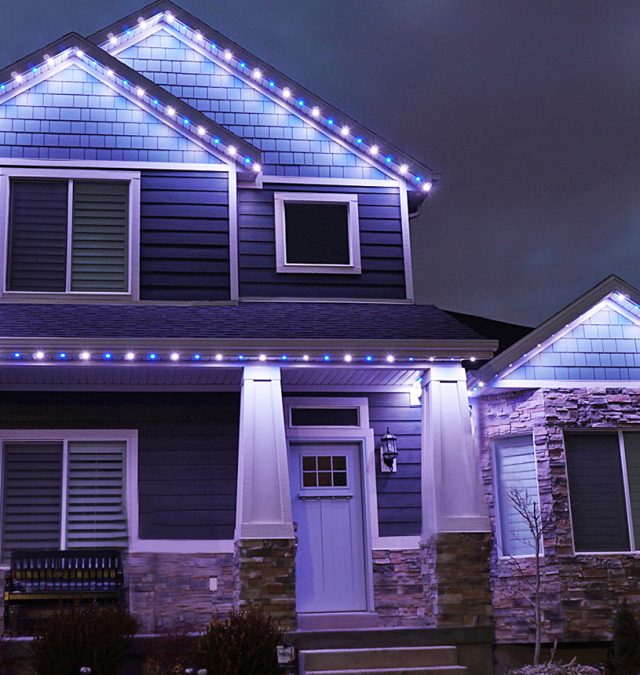
The honest starting point
Plenty of Knoxville homeowners should hang their own lights. A ranch in Powell with a low eave and a flat front yard is a Saturday afternoon, and hiring it out is a luxury rather than a necessity. This post is not an argument that everyone needs an installer.
It is an argument that the decision should be made on three things: how high the roofline is, what the product costs once you count everything, and what an East Tennessee winter does to it. Most people only think about the second one.
Height is the real question
Every holiday season, falls from ladders while decorating send thousands of people to emergency rooms across the country. The pattern is consistent: an extension ladder on uneven or soft ground, a reach to the side, cold hands, a wet or icy surface, and a fall from a height that does damage.
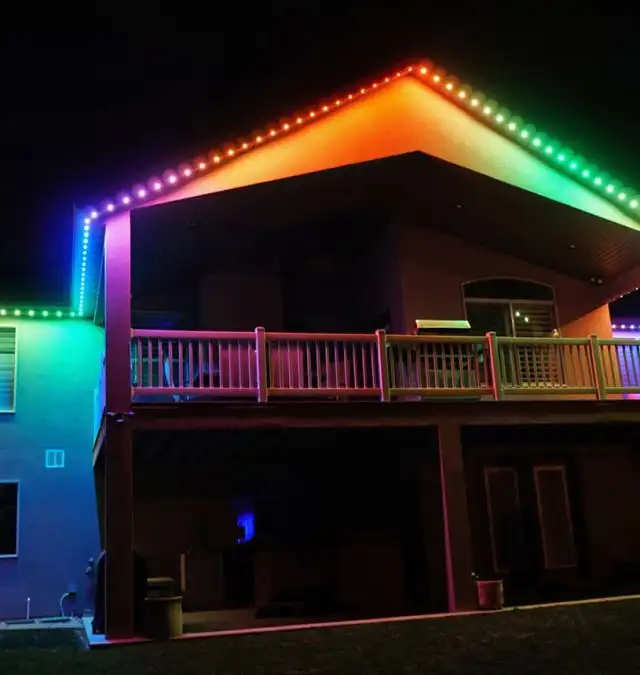
Knoxville's western subdivisions are built for exactly that. Farragut and Hardin Valley homes are largely under twenty years old, two stories and steeply pitched, with long unbroken rooflines. A two-story front with a walkout at the back can put the rear roofline three stories off the ground. Getting to the peaks means an extension ladder at full stretch on a sloped lot, on a cold December weekend, often with damp ground underneath. Our crews reach those elevations from a lift as a matter of routine, which is a different proposition altogether.
The older stock has its own version of the problem. Sequoyah Hills and Fountain City rooflines were never designed for a lighting run, mature trees sit across the approach, and the eave heights vary along the same house. The ladder work is lower but more awkward.
The rule of thumb is simple. If any part of the roofline needs more than a stepladder from firm, level ground, that part should be hired out. You can still do the shrubs, the porch rail and the wreath yourself.
What DIY actually costs
The string price is where most DIY budgets start and stop. Here is the full list for a typical 200-foot two-story front, which is roughly what an eave line plus a couple of gables comes to.
| Item | What you need for 200 ft | Notes |
|---|---|---|
| LED light strings | Enough 25 ft strings to cover 200 ft, plus spares | Fixed lengths rarely match the roofline; expect a gap or a bunch at each corner |
| Clips | Roughly one per foot, matched to gutter or shingle | Retail plastic clips are the usual failure point in freeze-thaw weather |
| Outdoor extension cords | Enough rated cord to reach every run from an exterior outlet | Must be outdoor-rated; connections need to stay dry for six weeks |
| Timer | One outdoor-rated timer per circuit | Cheap timers fail in cold and rain |
| Ladder | Tall enough to reach the highest peak safely | The single largest purchase, and the single largest risk |
| Your time | A weekend to hang, a day to take down, plus repairs | Plus testing and untangling every year |
| Storage | Bins and garage space | Strings tangle, bulbs crack, half the run is dead next year |
Decent LED product for that footage, with clips, cords and a timer, runs into the several-hundred-dollar range before you buy a ladder or count a weekend. Retail strings typically last a few seasons in this climate before sockets crack and sections go dark, so the product cost repeats. A professional roofline-only install on the same house typically runs $700 to $1,500 for the season at industry rates, and that includes commercial-grade lights, installation, in-season service, takedown and storage. The gap is real, but it is smaller than the string price suggests, and it buys the ladder problem away. Our Knoxville cost guide breaks the pro number down.
What an East Tennessee winter does to a display
This is the part national DIY guides miss. December in Knoxville averages a high near 51°F and a low near 33°F, and winter is the wettest season in the region. A display does not sit in a dry cold. It gets soaked, freezes overnight, thaws by midday and repeats that for weeks.
Clips let go
Thin plastic gutter clips and shingle tabs from a retail pack are designed to hold a string on a dry day. Under repeated freeze-thaw, the plastic stiffens, the fascia and gutter expand and contract, and the clip works loose. The typical DIY failure is not a dramatic collapse. It is a section sagging off the gutter line in the second week of December and nobody wanting to get the ladder back out. Commercial-grade clips matched to your specific edge, fitted to a dry surface in October, are built for exactly this.
Sockets split
Retail strings use thin sockets. Water gets in, freezes, and the socket cracks or the contact corrodes. One dead bulb on a series-wired string takes the section with it. Commercial-grade C9 bulbs sit in heavier sockets on custom-cut runs, and a failed bulb is replaced without losing the run.
Connections fail
Every plug-to-plug joint between strings and every cord connection is a place for water to sit. On a DIY display with eight strings and three cords, that is a lot of joints. A professional install minimizes them by cutting runs to length and weather-rating what remains.
Trees and wind
Sequoyah Hills, Bearden and Fountain City have mature trees over most rooflines. A wet winter with wind brings down twigs and small branches onto the eave line, and a run that is merely resting on the gutter comes down with them. Fitted clips hold.
What usually goes wrong, in order
- The strings do not fit the roofline. Fixed lengths leave a gap before the corner or a bunched tail after it. The display looks like an outline of the strings rather than the house.
- Half the run is dead by the second week. One socket takes in water, the section goes dark, and the ladder stays in the garage.
- The clips let go. A sag develops over the garage door and stays there until January.
- The timer stops working. The lights are on at noon and off at dusk, or on all night.
- Takedown gets postponed. January is wet and cold, so the lights are still up in February and come down in a tangle.
- Next year, half of it does not work. The bins come out, a third of the strings are dead, and the process starts again.
When DIY genuinely makes sense
If most of these describe your house, do it yourself and enjoy it.
- Single story, or a low eave you can reach from a stepladder on flat ground. Many Powell and Karns ranches and mid-century Oak Ridge homes qualify.
- A simple roofline with few corners, so fixed-length strings roughly fit.
- A budget where the pro price is genuinely out of reach this year.
- You are lighting shrubs, railings, a porch and a wreath rather than the roofline itself.
- You are willing to buy proper LED product, use real gutter or shingle clips rather than hooks or staples, and accept replacing strings every few seasons.
A sensible hybrid is common. Hire the roofline and the peaks, and do the ground-level work yourself. The dangerous part is gone and the budget is smaller than a full display.
When to hire it out
- Any two-story front, steep pitch or roofline over a walkout. That is most of Farragut and Hardin Valley, and our Farragut page explains what those elevations take.
- A historic-district home in Sequoyah Hills or around Gibbs Drive where daytime appearance and clip placement matter.
- You want the display to look the same in the third week of December as it did on the first day.
- You want someone else to own the January takedown and the storage.
And if you have reached the point of doing this every year and resenting it, the third option is to stop. Permanent roofline lighting from JellyFish Lighting or Bosso Smart Lighting goes up once, in a color-matched track under the eave, and is controlled from an app for the rest of its 50,000-hour rated life. Nobody climbs anything again. Our permanent vs seasonal comparison lays out whether the math works for your house, and the Christmas light installation page covers what a seasonal pro program includes.
Frequently asked questions
Is it safe to hang Christmas lights on a two-story roof myself?
It is the riskiest part of the whole project. Falls from ladders send thousands of people to emergency rooms every holiday season, and a two-story Knoxville front with a steep pitch, often worked in cold, damp conditions, is exactly the setup that produces them. If any part of the roofline needs more than a stepladder from firm, level ground, that is the part to hire out.
How much does it really cost to do Christmas lights yourself?
More than the strings. For a 200-foot two-story roofline you need enough LED strings to cover it, roughly one clip per foot, outdoor-rated extension cords and a timer, plus a ladder tall enough to reach the peaks. Decent LED product for that footage runs into the several-hundred-dollar range before your time, and the strings typically need replacing every few seasons. A professional roofline-only install typically runs $700 to $1,500 and includes service, takedown and storage.
Why do my Christmas light clips keep falling off in Knoxville?
The freeze-thaw cycle. East Tennessee winters are wet, with December highs near 51°F and lows near 33°F, so a display gets soaked, freezes overnight and thaws again for weeks. That movement works retail plastic clips loose and splits thin sockets. Commercial-grade clips matched to your edge and fitted to a dry surface hold through it.
When does DIY genuinely make sense?
A single-story home with a simple roofline you can reach from a stepladder, a modest budget, and the willingness to buy decent LED product and replace it every few seasons. Powell and Karns ranches, and many mid-century Oak Ridge homes, fit that description. Two-story fronts, steep pitches and anything over a walkout do not.
Can I hang Christmas lights on gutters without damaging them?
Yes, with proper gutter clips that hook the lip of the gutter and carry the run without piercing anything. Never use nails, staples or screws, and do not hang weight from the gutter itself with hooks that can bend the edge. Shingle-tab clips are the alternative where there is no gutter.
Does a professional install look different from DIY?
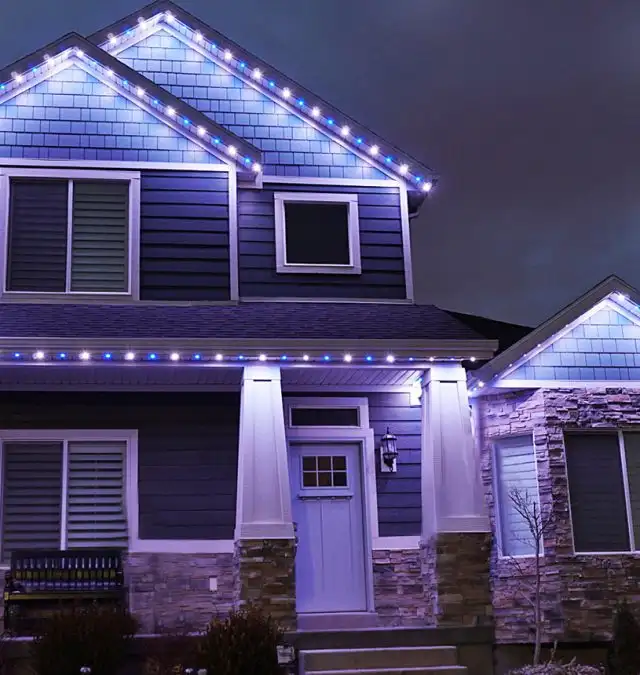
Usually, and the difference is in the corners and the spacing. Professional runs are cut to the roofline so they turn where the roof turns and hold even spacing across the elevation. Fixed-length retail strings fall short or bunch up, and the difference is obvious from the street.
Hire the roofline, keep your weekend
We measure the house, cut commercial-grade runs to fit it, reach the peaks from a lift, and come back if anything goes dark. The consult is free and the quote is fixed. Oak Ridge office, whole Knoxville metro.
Get a free quote or call (865) 264-0180.