Christmas Light Installation
The Corner Rule and the Peak Rule: What a Clean Holiday Light Installation Looks Like
New Age Lights • October 2026 • Knoxville, TN • 11 min read
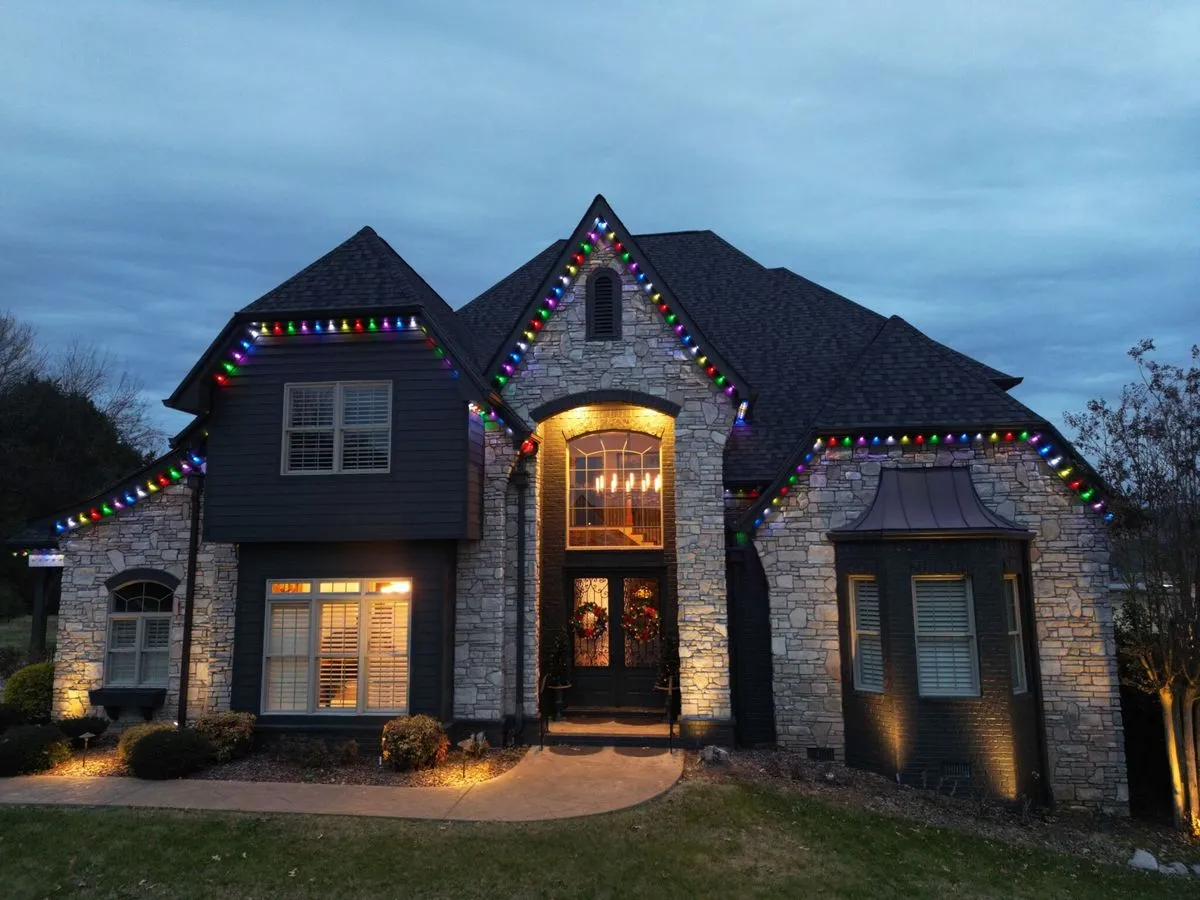
Short Answer: A clean holiday light installation comes down to details you can check from the curb. Every run should start and end on a bulb at a corner, and every gable peak should have a bulb at dead center, which only happens when the crew measures the roofline and counts the bulbs before install day. After that, look for even spacing, tight lines with no sag, no visible wire from the outlet, and bulbs that all match in color and brightness. Warm white, chosen by about nine in ten of our customers, is the least forgiving color, so every missed corner or off-center peak shows.
Drive almost any street in West Knoxville any night in mid-December and you can sort the houses in a few seconds. Some rooflines look like someone traced them with a ruler. Others look like the lights went up between errands. Most people feel the difference without being able to name it. This post names it, because the gap between a clean holiday light installation and a sloppy one comes down to a handful of details you can check from the curb.
It usually isn't the bulbs. Two houses can run the same warm white C9s and look nothing alike. What separates them is whether somebody planned the run before anyone climbed: where the first bulb lands, where the last one lands, what happens at the top of each gable, and where the wire goes. None of that shows up on a quote. All of it shows up from the street.
Here are the rules our crews work by on every house, in every market we serve. Use them to judge any installer, including us.
The corner rule: start on a bulb, end on a bulb
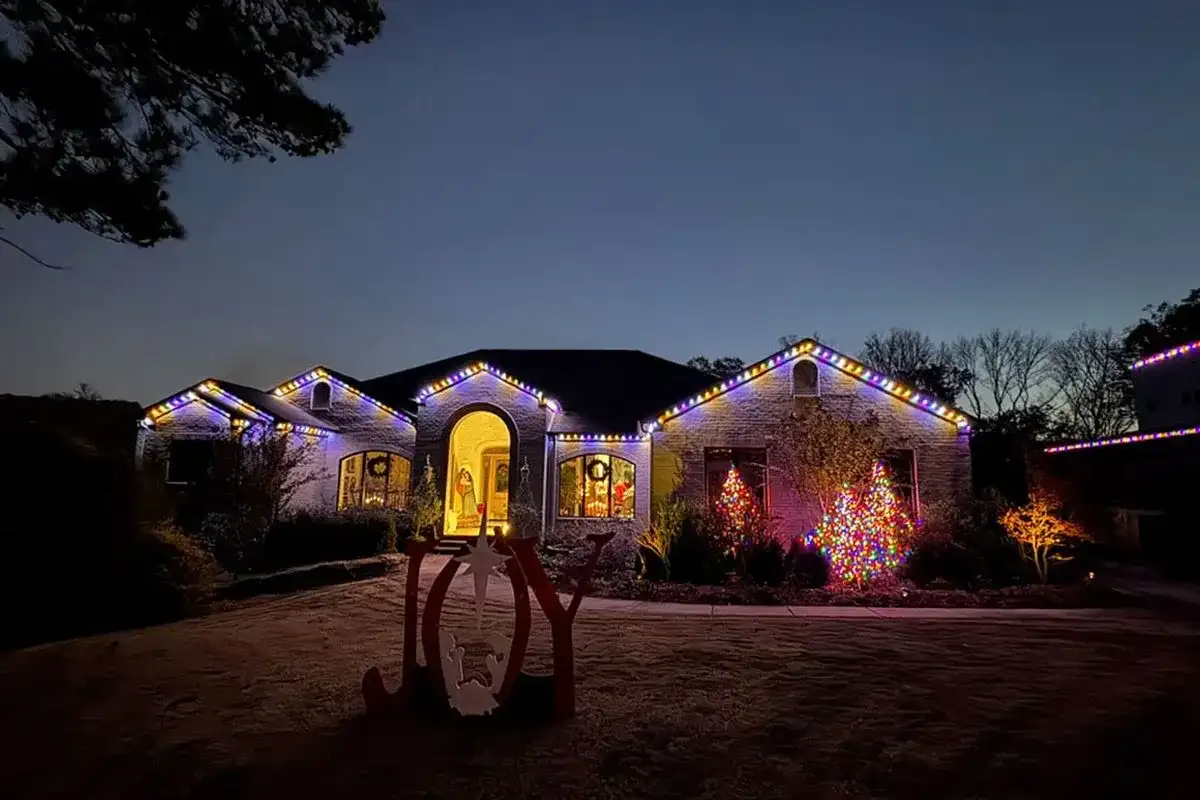
Look at the corners first. On a clean roofline, every run starts with a bulb sitting right at one corner and ends with a bulb sitting right at the next. The line looks like it was built to fit that edge, because it was.
On a rushed job you see the opposite. A run starts on a bulb, then quits six inches short of the far corner with a bare stretch of cord, or it overshoots and folds a bulb awkwardly around the turn. Repeat that at four or five corners and the whole house looks slightly off, even to a neighbor who couldn't tell you why.
Our crew lead puts it simply: if you start on a bulb at a corner, you need to end on a bulb at a corner. That sounds obvious until you try it. Roof edges are almost never an even multiple of the bulb spacing, so getting both ends to land takes planning, not fiddling on a ladder. It's why we measure every roofline at the consult and plan each run to fit that house, rather than hanging a fixed-length strand and hoping it lands.
Corners are also where house style starts to matter. A ranch with long, low runs has a few corners and a lot of straight eave. A newer two-story with bump-outs, a garage wing and a porch roof can have more than a dozen. Every one of them is a chance to land it or miss it.
The peak rule: a bulb at dead center, and why that means counting first
Now look up at the gables. On a properly done house, the very top of every peak has a bulb sitting exactly at the point. The two slopes rise to meet it and the line looks symmetrical from the driveway.
When a peak is off, it's the first thing your eye catches. Two bulbs straddle the point with a gap between them, or one bulb sits a few inches down one side. The gable reads lopsided, and gables are usually the tallest, most visible part of the front of the house.
This is the rule that separates planned work from improvised work, because you can't fix it on the roof. If the center bulb has to sit at the peak and the bulbs at both ends have to land on the corners, the count on each slope is fixed before anyone climbs. In our crew lead's words, sometimes you have to plan that a little: count the bulbs and know how many it's going to be. A crew that skips the counting will miss the peak or miss the corners. There isn't a third option.
It matters more on some houses than others. A lot of homes in Farragut and Hardin Valley are under twenty years old, two stories and steeply pitched, often with two or three front gables lined up across the elevation. Every one of those peaks needs its own center bulb, and because the gables sit side by side, an off-center one stands out against its neighbor. On a simple hip roof with one small gable over the entry, the stakes are lower. On a multi-gable West Knoxville two-story, the peaks are most of the show.
Spacing, tight lines and wire you never see
Once corners and peaks are right, three smaller details finish the job.
Even spacing. Every bulb should sit the same distance from the next, all the way around. Uneven spacing is easiest to spot on long, straight eaves, the kind a lot of newer two-stories carry across the front, because the eye has a long run to compare against. One spot where the bulbs bunch up, or one stretch where a clip slipped, and the line stops looking deliberate.
Tight lines. Sight down the gutter from one end. A good line is straight and taut, with no sag between clips and no bulbs tipped at different angles. Our crews take real pride in straight bulbs and tight lines, because a sagging cord reads as cheap from a block away, especially at night when the bulbs are the only thing you can see.
Tight also has to last. The National Weather Service puts a normal Knoxville December at a high of 51, a low just under 33 and about five inches of precipitation, so a roofline spends the season going from frosty mornings to wet afternoons. The Electrical Safety Foundation recommends that outdoor lights be fastened firmly enough that wind can't work them loose, without mounting them in a way that damages the cord's insulation. We use clips matched to the roof edge and never drive nails or staples through roofing. A line that's secured properly on install day should still look the same at New Year's.
Hidden wire. Notice where the power comes from. On a careful install you shouldn't be able to trace the cord from the outlet to the roof. Leads get tucked behind downspouts and along trim, and the run itself sits so the cord stays behind the bulbs. A loose extension cord hanging down the front of the house undoes a lot of good work above it. In daylight, a clean install should look tidy rather than strung up.
Why bulb grade shows from the street
People assume the bulbs are where quality lives. They do matter, just not the way most people expect. Grade shows up as consistency.
We use commercial grade bulbs, not what you'll find on a big-box shelf. The difference you can see from the street is uniformity: every bulb the same color and the same brightness, with no stray bulb glowing a little off from the rest. Mix two batches of bargain warm white and you'll often catch it, a run where half the bulbs look a shade off. A good crew catches that before anything goes up.
Anything hung outside should also be rated for it. The Consumer Product Safety Commission and UL explain that UL's red holographic label means a light set meets requirements for both indoor and outdoor use, while the green mark means indoor only. It's a two-second check worth making on any set going on your house.
Warm white and why nine out of ten customers land there
Customers choose their color: traditional multicolor, blue, white, bright white or warm white. About nine in ten pick warm white. It reads as classic, it suits brick and stone as well as painted siding, and it photographs well. If you're still deciding what to outline and which bulb style fits your house, our post on Christmas light design ideas for Knoxville homes covers that side.
Here's the catch. Warm white is the least forgiving color for execution. With multicolor, the eye is busy with the pattern. With one warm white line, there's nothing to look at except the line itself, so every missed corner, off-center peak and sagging run is on full display.
How to judge an install (or a quote) in two minutes
You can run this check on your own house, a neighbor's, or photos an installer sends you:
Corners. Does every run start and end on a bulb?
Peaks. Is there a bulb at the exact top of every gable?
Spacing. Sight down the longest eave. Are the bulbs even?
Lines. Any sag between clips, or bulbs pointing different directions?
Wire. Can you see cord running from the outlet?
Color. Do all the bulbs match, or does one section look a shade off?
When you're collecting quotes, ask how the company handles the first two. If the answer is that they measure the roofline and count the bulbs on every run before install day, that tells you a lot. If the answer is vague, ask specifically how they land the peaks. Our list of questions to ask before hiring an installer covers insurance, service calls and takedown. This list is about what you can see.
It's also fair to ask how the crew works on the roof. OSHA guidance says residential workers six feet or more above a lower level need guardrails, safety nets or a personal fall arrest system. Our crews tie off on roofs. A company that's careful about that tends to be careful about the rest.
Then put the list to work. Scroll through our lighting gallery and judge the corners and peaks for yourself.
When to book a holiday light installation
Every house gets measured and planned before install day, and the season fills in the order people call. Our post on when to book Christmas light installation in Knoxville walks through the calendar, and what goes into the price is covered on its own.
A roofline that looks drawn on
We plan every house the same way in every market we work: count the bulbs, land the corners, center the peaks, fit every run to the roofline and hang it tight. After takedown, everything for your house goes into a tote labeled for it, so the same fitted lines go back up next year (more on takedown and storage). Every job includes a timer, and wreaths and garland are available if you want the entry to match the roofline. If you'd rather leave lights up year round, JellyFish permanent lighting is the other route.
Our seasonal Christmas light installation service covers West Knoxville homes and neighborhoods along with Farragut, Hardin Valley, Karns and Powell. If you're weighing Christmas light installation in Knoxville this year, call (865) 264-0180 or request a free quote, and we'll measure your roofline and build the plan around it. More answers live on our lighting FAQ page.
Frequently Asked Questions
What makes a holiday light installation look professional?
A professional holiday light installation has a bulb at every corner, a bulb at the top of every peak, even spacing, tight lines and no visible wire. Those details come from measuring and counting before install day, not from the bulbs alone.
Why do some Christmas lights look uneven on a roofline?
Christmas lights look uneven on a roofline when the run wasn't planned to fit the roof's corners and peaks, so bulbs fall short of the ends or straddle the top of a gable. Slipped clips and sagging cord between clips make it worse.
What is the difference between commercial grade and store bought Christmas lights?
Commercial grade Christmas lights hold more consistent color and brightness from bulb to bulb than typical store bought strings. That consistency is what lets a single warm white line look uniform from the street instead of patchy.
What color Christmas lights do most homeowners choose?
Most of our customers, roughly nine in ten, choose warm white Christmas lights. Traditional multicolor, blue, white and bright white are also available.
Do professional installers use the same lights on my house every year?
Some do, and at New Age Lights the same lights go back on your house every year from a tote labeled for that house. Because the lines were built to fit your roofline, they land on the same corners and peaks again.